Newsletter
Human first, human last: The CCA approach to AI
In this edition:
- Human first, human last: The CCA approach to AI
- Canada is missing an opportunity to draw greater value from national-scale research infrastructure
- Following the evidence: Canada’s evolving response to the threat of antimicrobial resistance
- In the news
Human first, human last: The CCA approach to AI
By: Tijs Creutzberg, President and CEO

The premise of evidence-informed policy is simple enough: get the evidence right and good policy follows. In other words, a policy or program that accounts for the relevant evidence is more likely to achieve its objectives and avoid pitfalls than one that relies on anecdotal, incomplete, or low-quality knowledge.
Such is the allure of AI in the realm of evidence and policy: to marshal evidence from across the global digital realm and provide succinct interpretations that can inform any and all policy areas. In the hands of parliamentarians, policy analysts, cabinet tables, and boardrooms, it stands to usher in an era of faster decisions informed by a wider foundation of facts than what current processes allow. However, this rosy picture deserves careful scrutiny.
There is no question that AI has immense potential, but what do we know of its limits for informing policy? Much has been written of AI hallucinations, including fabricated references and implicit bias rooted in training data used by large language models. The CCA itself has been credited and cited on several occasions with work we did not produce.
Less discussed is what is missing from the data sets that underpin the training of AI models, the conclusions they reach, and whether any data used are outdated or intentionally false. We know little about how the knowledge accessed by AI tools can differ from the knowledge that lies beyond their reach. And for the Canadian context, what of Indigenous knowledge, or non-English language evidence, which we know to be underrepresented in the training data? As for epistemology, how do these models weigh evidence and knowledge to arrive at an AI-proclaimed point of consensus? Do they favour scientifically derived knowledge, or knowledge stemming from moral or legal reasoning, for example?
The reality is that AI models are opaque and hard to test. With model parameters—the learned values that determine predictions—surpassing a trillion, today’s new AI models are not readily interrogated for the purpose of understanding how analytical decisions are made. Nor will they be any time soon. For consequential policy decisions, there is therefore a trust gap in using AI that cannot simply be overcome through verification. Experienced judgment will likely remain paramount in trusting AI results.
So where does this leave us and other organizations that hold themselves to a high degree of research quality? What best practices allow AI to be used effectively and reliably to support evidence for policy? These are the questions we are now asking. And when it comes to AI, the CCA is, as always, eager to learn. We are open to the possibilities, but not at the cost of delegating our core responsibilities, and those of our expert volunteers, to a tool that may not meet our standards or share our values. The policy decisions informed by CCA assessments are too important to introduce that level of risk. To this end, we are making the following commitments to our sponsors, readers, users, volunteers, and wider community:
- CCA reports are human first, and human last. While we may use AI assistance for mechanical tasks such as proofreading, data analysis, or evidence identification, our reports are written by people, with human-centred oversight every step of the way.
- We do not outsource judgment to AI. Our volunteer experts and staff debate, weigh, validate, and synthesize a range of evidence, some of which is beyond the reach of AI. The result is trusted knowledge that is robust and relevant in the Canadian context.
- We make good evidence available to AI systems. The CCA has a mandate to inform national conversations on important issues, and that includes supporting better quality responses for people who increasingly turn to AI for information.
AI use in the evidence-for-policy landscape will, of course, continue to change rapidly for the foreseeable future, requiring ongoing reassessment, which we shall do openly and transparently. To ensure we have the best processes and guardrails for managing AI in a way that enhances and protects the integrity of our work, the CCA has begun to engage with the wider policy community of experts and practitioners to listen, learn, and share lessons, including promising use cases.
The next two stops on this journey are the Falling Walls Science Summit in Berlin next week and the Canadian Science Policy Conference in Ottawa later in November, where the CCA will be in panel conversations to better understand the issues at stake. More is to come, so keep an eye on this newsletter next month for an invitation to join us for what follows.
Canada is missing an opportunity to draw greater value from national-scale research infrastructure
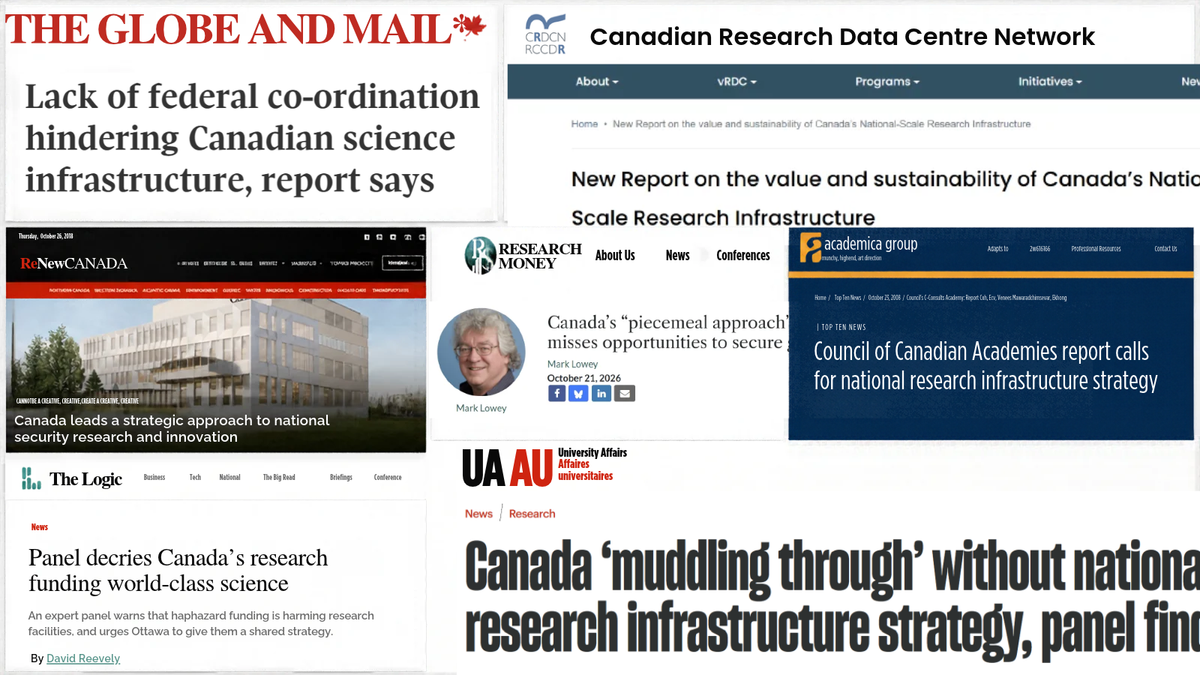
On October 20, the CCA released Enhancing Canada’s National-Scale Research Infrastructure, a new expert panel report exploring how Canada can make the most of its large-scale scientific facilities, digital platforms, and collaborative networks.
Research infrastructure plays a vital role in advancing scientific discovery, driving innovation, and supporting Canada’s economic prosperity. The report examines the strengths and gaps in Canada’s current research infrastructure ecosystem and identifies opportunities to improve planning, governance, and investment to better meet current and future needs. The report was well-received, with coverage in The Globe and Mail, The Logic, and University Affairs.
The full report and supporting materials are available on our website.
Following the evidence: Canada’s evolving response to the threat of antimicrobial resistance
Antimicrobial resistance (AMR) is a significant and growing threat to people, communities, and economies around the world. In 2019, the CCA expert panel report When Antibiotics Fail painted the most comprehensive picture of the real costs of AMR to Canada to date. In 2018, 26% of bacterial infections were resistant to first-line drugs, and the panel estimated that 5,400 lives were lost due to AMR, costs to the healthcare system totalled $1.4 billion, and GDP was reduced by $2 billion. They also predicted that if the rate of resistance reached 40% by 2050, annual GDP losses could reach $21 billion. More recently, researchers from the United States and India estimated that AMR was linked to $3.5 trillion (US) in economic losses worldwide in 2021.
The 2023 Pan-Canadian Action Plan on Antimicrobial Resistance drew on the CCA’s estimates and set out 10 priority actions for governments across Canada, including a commitment to “develop and implement economic and/or regulatory incentives to support innovation and facilitate sustainable access” to antimicrobials.
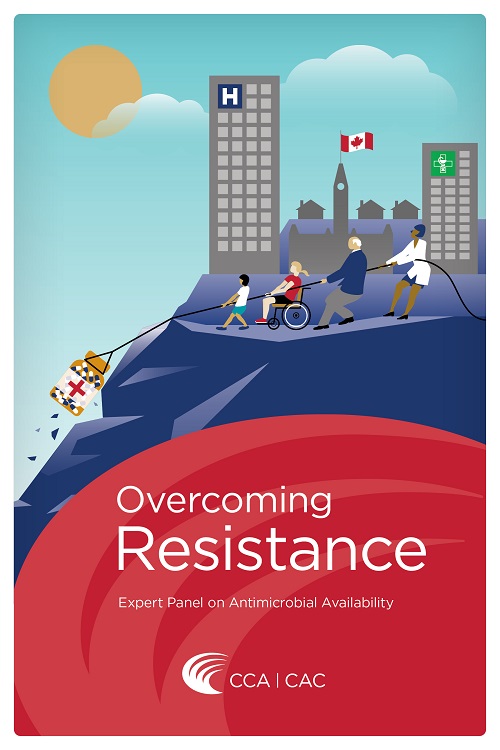
From 2010 to 2019, the Government of Canada secured access to only 2 out of the 18 new antibiotics launched worldwide. In 2023, Overcoming Resistance, a CCA expert panel report requested by the Public Health Agency of Canada (PHAC), found that a Canadian subscription-style pull incentive, which pays for a drug’s value rather than its sales volume, offered the greatest potential to improve access. PHAC is now preparing the AMR Innovation Pilot, and applications are expected to open this fall.
Earlier this month, the House of Commons Standing Committee on Health recommended measurable targets and dedicated funding for the action plan.
The current action plan expires in 2027, but decisions about how to respond to AMR will continue in governments, industries, and healthcare settings across the country. Keeping those decisions grounded in current evidence will be essential to protecting the health and prosperity of Canada and its people.